
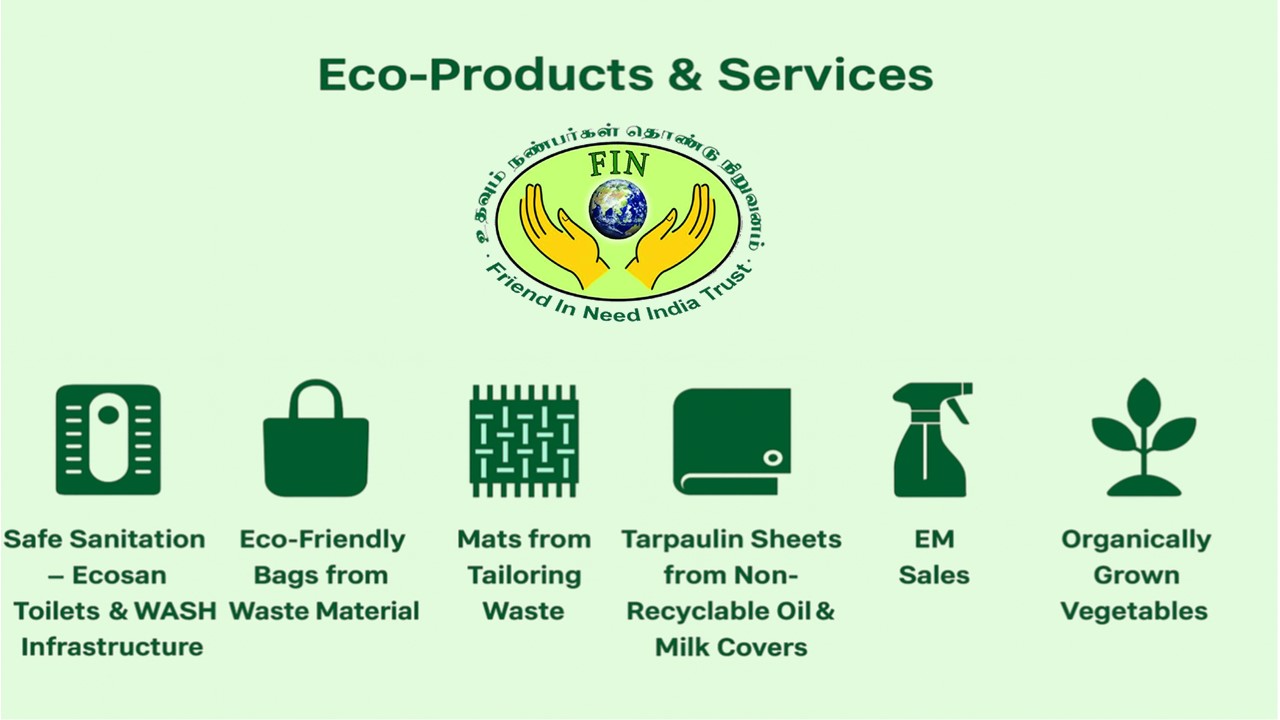
- Safe Sanitation – Ecosan Toilets & WASH Infrastructure
FIN constructs ecosan (ecological sanitation) toilets and other WASH facilities to provide safe, water-efficient sanitation solutions. It builds safe toilets according to the ecological conditions of the location. For high water table areas, FIN promotes the ecosan model which separates waste, prevents groundwater contamination, and supports resource recovery—making it ideal for coastal villages.
- Eco-Friendly Bags from Waste Material
FIN produces attractive bags made from discarded cloth and waste materials collected from local tailors. These bags reduce textile waste, promote reuse, and provide income to women who sew them as part of the tailoring programme.
- Mats from Tailoring Waste (“Rewoven Mats”)
Tailoring scraps are creatively transformed into colourful, handwoven mats. This upcycling initiative minimises fabric waste while offering women dignified work and a marketable eco-product.
- Tarpaulin Sheets from Non-Recyclable Oil & Milk Covers
FIN converts non-recyclable plastic waste—such as used oil packets and milk covers—into sturdy tarpaulin sheets. This innovative circular-economy project reduces landfill burden and demonstrates how waste can become a valuable resource.
- EM (Effective Microorganisms) Sales
FIN promotes the use of EM solutions for composting, odour control, and wastewater treatment. By selling and training households in the use of EM, FIN fosters cleaner homes, healthier surroundings, and sustainable waste practices.
- Public Gardens
FIN develops and maintains public gardens using eco-friendly approaches. These green spaces enhance village aesthetics, support biodiversity, and serve as educational sites for environmental learning.
- Organically Grown Vegetables
FIN grows and promotes vegetables cultivated using organic methods. These gardens demonstrate sustainable agriculture practices, encourage healthy eating, and inspire households to adopt chemical-free cultivation.