
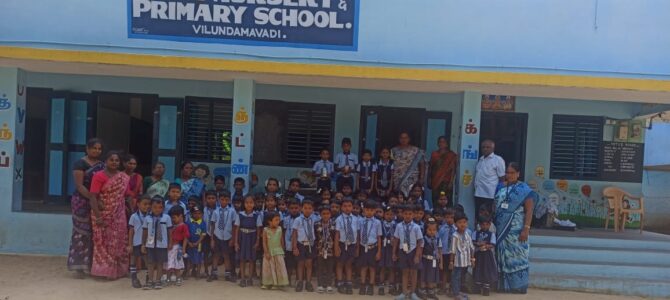
This year, our celebrations of World Toilet Day began on 14 November, Children’s Day, in the coastal village of Vizhundamavadi, where the spirit of environmental stewardship came alive through the eyes and colours of children.
Teaching Change Through Children
Our programme at Jaya Nursery and Primary School focused on the broader theme of sanitation and hygiene, with a special emphasis on behavioural change. We spoke to children about why littering on beaches and in public places is harmful, how waste clogs rivers across Tamil Nadu, and what simple actions they could take to protect water bodies.
The children listened with remarkable attention. Their discipline, curiosity, and eagerness to understand the world around them stood out. Each child received a box of crayons — and for nearly two hours, the classroom transformed into a studio of creativity, hope, and environmental imagination.
Their task: Draw what pollution means to you — and how we can stop it.
The results were powerful. Below are reflections on the four prize-winning drawings, each a moving reminder of how children understand the environmental crisis far more clearly than most adults.
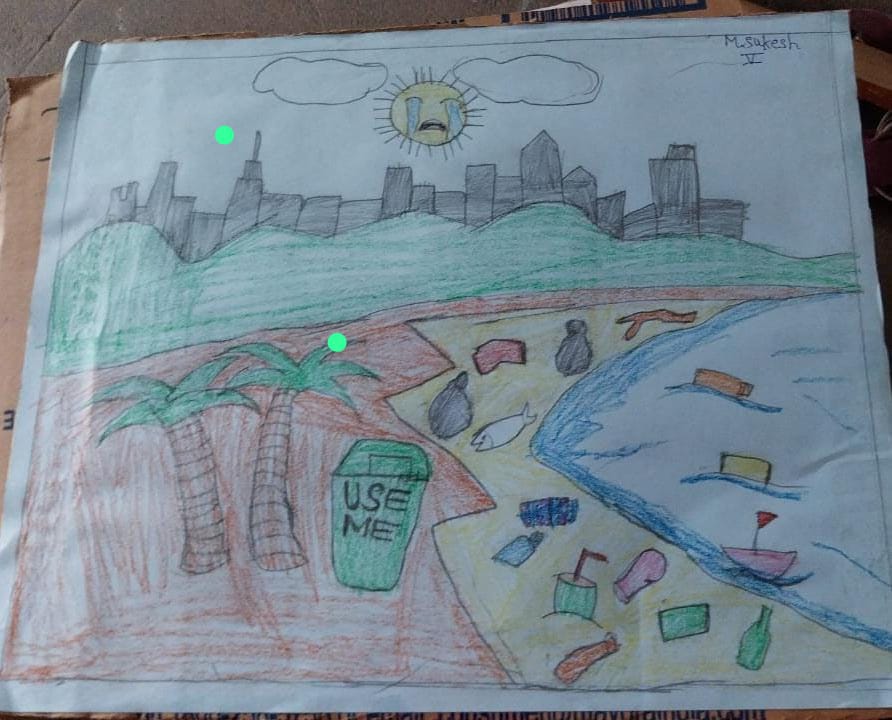
 First Prize: A Crying Sun and a Polluted Beach by M. Sukesh (Vth Standard)
The first drawing shows a vibrant landscape overshadowed by human neglect. The sun is drawn with tears, a striking metaphor that even the natural world mourns our actions. The skyline in the background hints at growing urbanisation, while the foreground shows a beach littered with bottles, sachets, and plastic bags.
Two coconut trees stand tall beside a “USE ME” dustbin, a message from the young artist urging all of us to take responsibility.
This drawing is powerful because the child has grasped a deep truth: pollution is not only harming animals and humans — it is hurting the Earth itself.
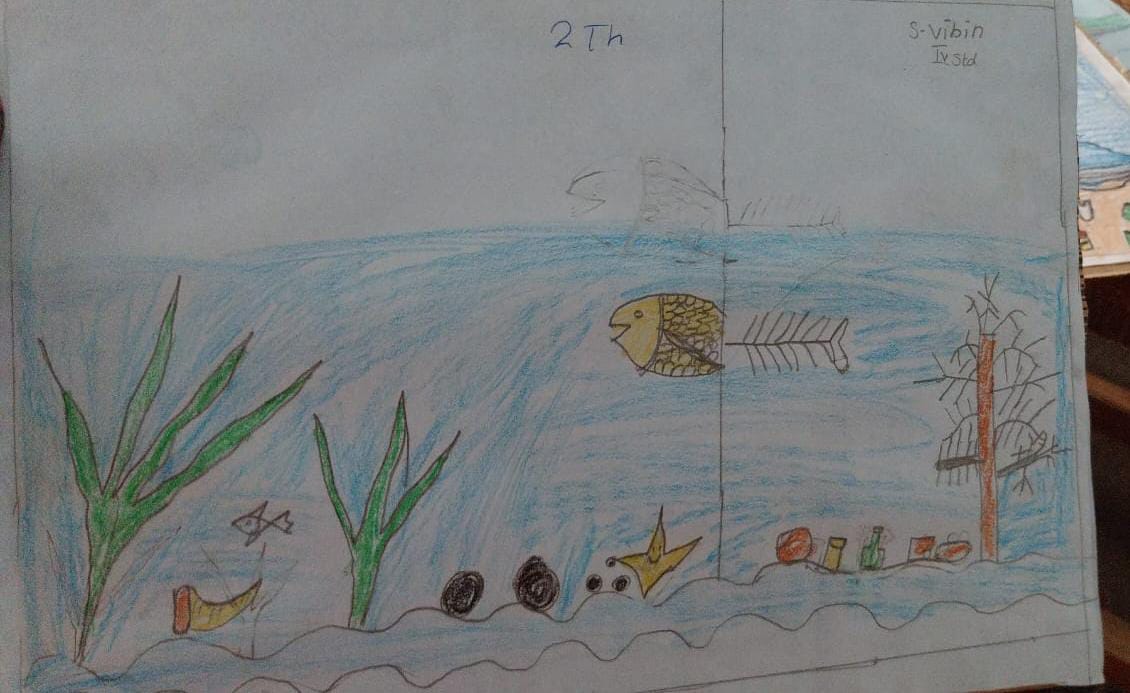
Second Prize: The Dying River Ecosystem by S. Vibin (IVth Standard)The second artwork dives underwater, showing a once-living river now suffocated by waste. On the left, healthy green plants sway underwater — but on the right, life has faded into a skeletal, dying fish and barren tree.
The contrast between the two halves shows a sophisticated understanding of ecosystems. The child has clearly depicted how pollution travels, spreads, and eventually destroys aquatic life.
This is environmental education in action — internalised, understood, and expressed poignantly.
Third Prize: “Help Us!” — A Plea from Marine Life by R.K. Narguna Nandhana (IVth Standard)In this drawing, the seabed is strewn with plastic bags, bottles, and cups. A turtle trapped among the waste calls out, “Help us!”, while a whale swims nearby, looking on helplessly.
A ship in the distance releases a large blob of waste into the ocean — a painful but accurate representation of how human activities poison marine ecosystems.
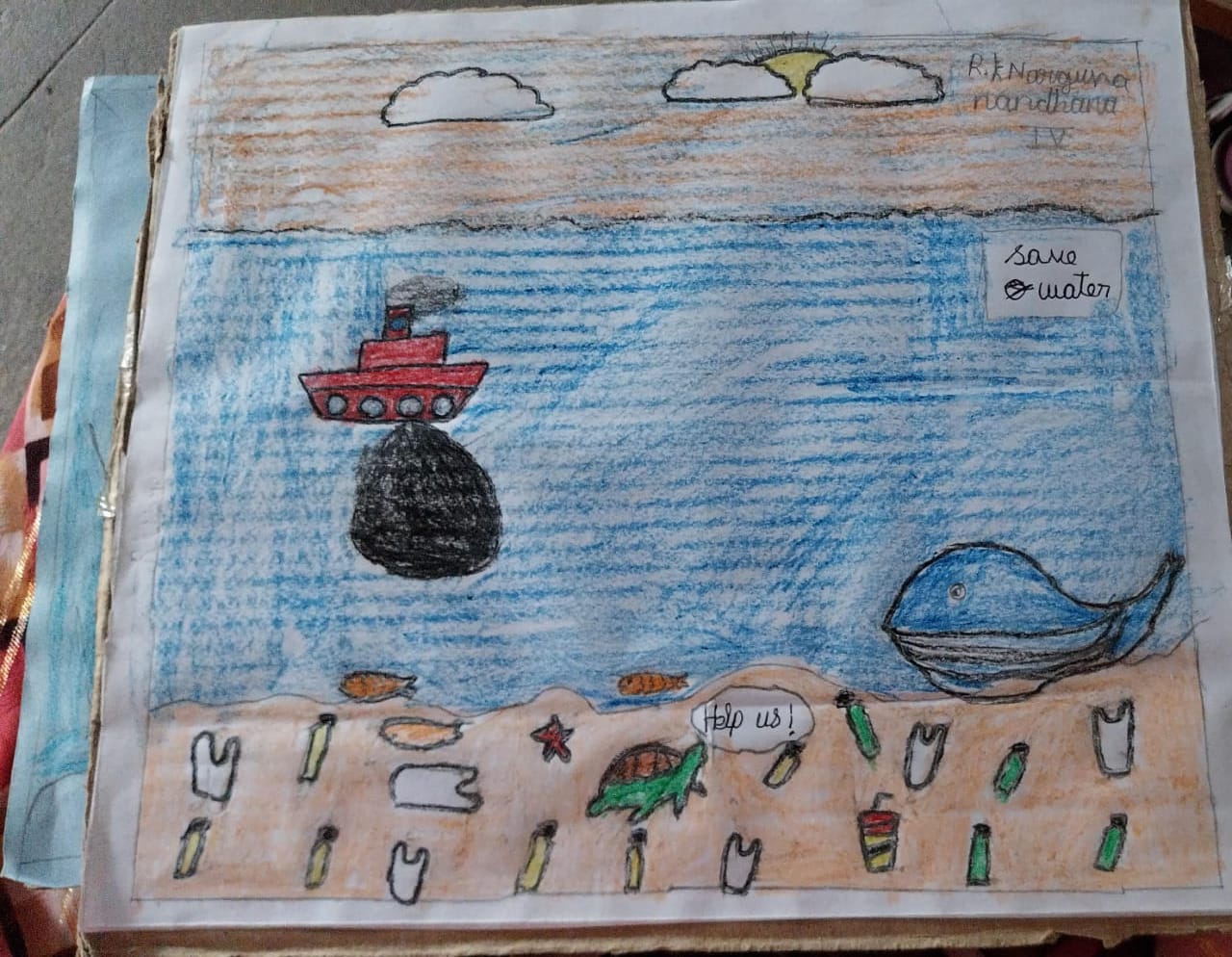
What stands out is the child’s sharp awareness: pollution is not accidental — it is caused by us.
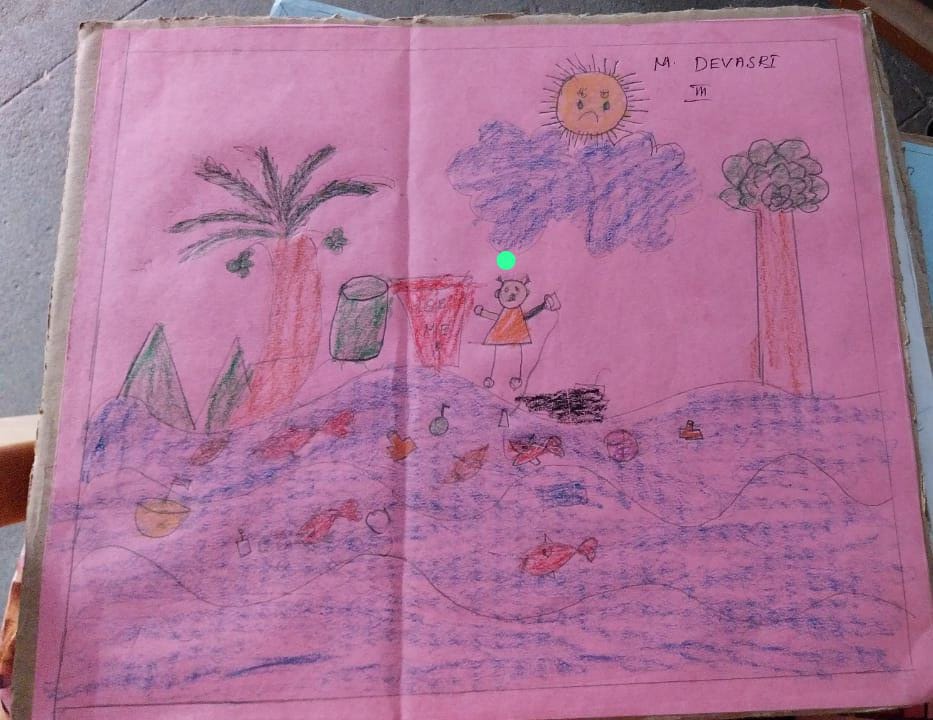
Third Prize: A Pink Sea of Concern by M. Devasri (IIIrd Standard)The fourth winner used a bright pink sheet — but despite the cheerful background, the message is sobering. A child stands near a trash bin, pointing to the heaps of waste floating in the water. The sun once again wears a sad expression, echoing the theme of emotional environmentalism the children resonated with.
Fish, trees, mountains, and people all appear in this picture — a reminder that pollution affects every part of nature and every form of life.
Celebrating Young Changemakers
At the end of the event, the students proudly displayed their posters. The prize winners received awards, the Headmaster Mrs. Jayapradha honoured the FIN team, and everyone came together for refreshments organised by FIN staff — steaming tea, sweet ladoos to brighten the day, and nutritious black peas sundal for energy.
As we wrap up this first leg of our World Toilet Day season, we at FIN are reminded once again of why we do this work. Children see clearly. They understand consequences. They are not afraid to imagine a cleaner world. And it is our duty to help them build it.