
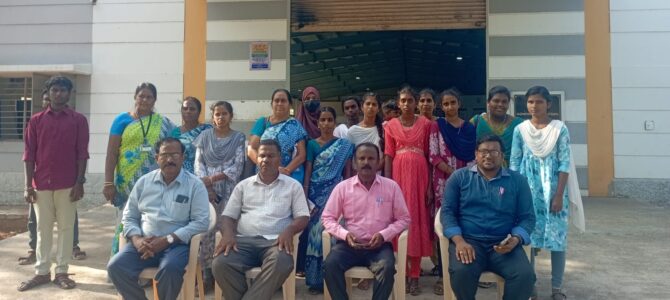
On 19 May, FIN Rural Labs organised a visit for youth from Kameswaram and Vilundamavady to the Government Industrial Training Institute (ITI) in Nagapattinam. The group was warmly received by Mr. R. Manivannan and his team.
The visit introduced participants to the world of Industry 4.0, where modern manufacturing combines machines, automation, robotics, digital technologies, and artificial intelligence. Youth toured training facilities, interacted with equipment, and learned about the skills increasingly demanded by industry.
The Nagapattinam ITI is one of 71 government ITIs being upgraded through a collaboration between the Tamil Nadu Government and Tata Technologies. The initiative aims to provide high-quality, industry-relevant training to young people from rural and low-income backgrounds at an affordable cost.
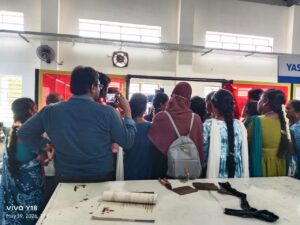
Students were informed about the many benefits available, including hostel accommodation, uniforms, shoes, stipends, free transport, and even opportunities to learn driving. They also learned about the career pathways that ITI training can open in manufacturing industries, railways, and other sectors.
FIN is working with institutions such as ITI Nagapattinam to help rural youth become aware of these opportunities and encourage them to make use of government-supported skill development programmes.
During the visit, the students were taken through a variety of training workshops and laboratories. They saw robots and advanced manufacturing equipment in action and were introduced to the practical skills required to operate and maintain such systems. Some students were even invited to handle the equipment themselves, making the experience both educational and exciting.
An important part of the visit was the opportunity to interact with current ITI students. Rather than listening only to teachers and administrators, the visiting youth were able to speak directly with young people already enrolled in the programmes. These conversations provided a realistic picture of student life, training expectations, hostel facilities, and future career opportunities.
The girls in the group were particularly interested in understanding how safe the hostels were for women. Some of the boys asked practical questions about what would happen if they became ill while living away from their villages. The responses they received were reassuring.
Interestingly, the current students spoke very highly of Mr. Manivannan. They described him as firm and disciplined, but also caring, responsible, and deeply concerned about student welfare. Their praise appeared sincere, especially because these comments were made informally when he was not present. This left a strong impression on the visiting youth, many of whom said that they would feel comfortable studying in such an environment.
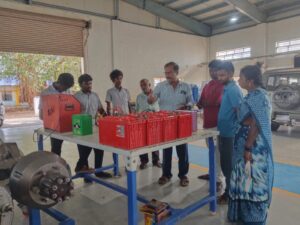
The visit also highlighted how much opportunities for technical training have expanded, especially for rural youth and women. In earlier generations, manufacturing and technical occupations were often considered inaccessible to village women. Today, those barriers are steadily disappearing.
Perhaps no one was more enthusiastic than Ms. Meena from the FIN team. As she watched the demonstrations and listened to the explanations, she became increasingly excited about the possibilities. After the visit, she confessed that she had even asked Mr. Manivannan whether she could join one of the programmes herself.
“I don’t mind going to Chennai or Coimbatore for work,” she said. “I would love to learn these things.”
Mr. Manivannan’s response was both kind and amusing. After asking her age, he explained that she was unfortunately beyond the age limit for the programme.
Although disappointed, Meena remained inspired.
“I don’t understand why more young people are not taking advantage of this opportunity,” she remarked afterwards. “If I were younger, I would join immediately. These opportunities did not exist for women like us before. It is wonderful that village girls today can learn these skills and participate in modern manufacturing.”
Her reaction captures exactly why visits such as these matter. Many rural youth are unaware of the opportunities available to them. Others lack confidence or information. By creating exposure, answering questions, and connecting young people directly with training institutions, FIN hopes to bridge this gap.
The programmes at Nagapattinam ITI will begin in September. Until then, FIN will continue its efforts to raise awareness, motivate youth, and support those who wish to pursue technical training and skilled employment. The future of Industry 4.0 should not belong only to cities. It should also be accessible to the talented young people growing up in villages like Kameswaram and Vilundamavady.